

Are you someone who wants to achieve academic success, but you don’t know how?
If so, this post is for you.
I will show you a terrific strategy for improving your grades, one that has been proven to take one’s grades to the next level.
What is this “terrific strategy” you might ask?
Great question.
This “terrific strategy” is none other than active recall.
What is active recall you ask?
Read on and I’ll tell you about active recall and how to use it.
Let’s go!
Table of Contents
What Is Active Recall and Why Does It Work?
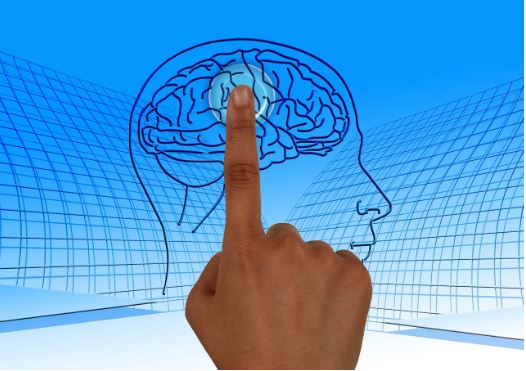
Active recall is the process of retrieving information from your mind without notes, without a book, and with your voice.
It is a powerful method of studying that only the top students know about.
The way it works is like this:
Imagine if you just finished reading a section or a chapter in a book or it’s been some time since you’ve looked at that material.
You have to make sure you know the material before the exam.
With active recall, you state as much information as you remember about a topic without using any references to guide you.
Essentially, you are testing yourself on your knowledge about a subject.
This makes active recall simulate an exam-like environment because you are trying to retrieve information from your mind to answer questions that might be asked about a subject.
You can do active recall by creating your own questions or simply summarizing what you learned as if you were teaching someone else the topic.
This is the beauty of active recall. You are practicing what you might encounter in any exam environment.
When you practice retrieving what you learned with no help from outside sources, you are improving your brain’s ability to connect ideas and concepts, which in turn assists with helping you recall the information and do so as quickly as possible.
Whether you have an exam coming up or a presentation, there isn’t a better study strategy than this.
Multiple studies have been done that show the effectiveness and results of using active recall versus using other study strategies like reading a book again and highlighting. Active recall comes out as the top study strategy producing the highest grades and test results when compared to the study strategies I listed above.
These studies can be seen here, here, and here.
And for your information, an inference is a conclusion someone draws about something by using the information they already have about that something.
Making inferences is the process of using evidence and/or context clues to develop a conclusion about a situation and/or about something’s behavior.
It’s the process of making educated guesses about something when you don’t know the answer to a particular situation. You use your knowledge about a given situation and the concepts involved in the situation to make a best guess as to what a situation and/or something’s behavior means.
In other words, knowing the concepts to get the correct answer.
A video that outlines the results of these studies can be seen below:
Pretty impressive, right?
Now, if you are convinced that active recall is the study strategy you should use to ace your exams, let’s talk about a few ways to implement active recall into your studies.
Way #1: Read and Recite What You Are Learning Out Loud

This one has worked for me in my personal experience.
I would read the material out loud as if I were teaching a group of imaginary students instead of reading and staying silent.
Essentially, this is active recall in real-time. I read the material once and then I summarize what I just read in my own words right away.
This is the first part of a practice called “lecturing to the wall,” which involves you reading the material and then stating out loud what you learned to a group of students in your mind.
This method of reading, at least for me, improves my ability to remember the information I just read. When I don’t read out loud, I tend to forget what I read pretty quickly.
This is because when you read aloud to yourself, your mind is already quizzing itself, which improves its ability to connect concepts you just read about. In turn, your understanding of the material you are reading increases.
There is one case study of a student who did this and the result was that the student went from being a mediocre student to having the highest Graduate Records Exam (GRE) scores out of all of the applicants who applied to the Massachusetts Institute of Technology (MIT) the year he applied. He also got full scholarship offers from the California Institute of Technology (Caltech) and MIT.
When I implemented lecturing to the wall, the worst semester GPA I got in my last 2 years of college was 3.85. I received the top scores on many exams in my classes and people were wondering how I was getting the results I was getting.
The answer is active recall.
I implemented it consistently, and I got results consistent with what research and case studies say about the results one would get when he or she implements active recall.
You’d want to implement active recall in 2 times:
- While you are reading what you need to read; and,
- When you are reviewing the material after some time has passed since you first learned it (this is the second part of “lecturing to the wall”).
Why?
Because the more you repeat the material to yourself, the higher the likelihood that the material will stick in your mind.
Multiple research studies prove this combined with the Ebbinghaus forgetting curve demonstrating that we lose the information we’ve been exposed to after not being exposed to that information again for a while.
If you remember anything in this section of the post, know this quote from an entrepreneur named Tony Robbins:
“Repetition is the mother of all skill.”
Know that quote and know it well because it can make things more clear when you attempt to implement active recall if you haven’t before.
The more times you study something, the more content you’ll retain and the more confident and comfortable you’ll be with that concept.
If you want to learn more about active recall and the effectiveness of speaking out loud the material to yourself, I encourage you to read this post here on Medium about someone who talked aloud what she was reading and used this concept of reading aloud to earn great grades.
You can also read this article here that outlines how to implement active recall in a simple step-by-step format.
Way #2: Close Your Eyes While Reciting Information To Yourself

This is a really cool trick; I promise 🙂
If you close your eyes while doing active recall, you’ll improve the amount of information you retrieve, and ultimately retain, in your mind.
Why is this the case?
Well, research from the University of Surrey says from a research study that the brain exerts even more effort to retrieve information from itself when you close your eyes. Because closing your eyes makes your mind more engaged with the material, you’ll retrieve quite a bit more than if you did active recall with your eyes open.
Supposedly, your mind is forced to draw a picture of what it is trying to recall. Hence, because it has to do this, it exerts more effort to recall information than if you have your eyes open when you can see anything (along with distractions that can derail your attention).
The research study said that when participants closed their eyes to recall things from a film they watched, their recall of the material in the film was 23% better than those who were assigned to recall items from the film with their eyes open.
Even better, another study that tested the effects of recalling information with your eyes versus with your eyes open found that those who closed their eyes recalled 44% more information than those who recalled information with their eyes open.
Personally, when I close my eyes, I find that my mind exerts more effort in retrieving information than when I have my eyes open.
It’s more work when you close your eyes to retrieve information, but as the saying goes, the harder you work, the luckier you get.
And so is the case with closing your eyes to recall information versus opening them to recall.
I don’t recall closing my eyes to recall information when I was in university, but when I tried it after I left university, I noticed better results with closing my eyes than when I attempted to recall information with my eyes open.
It is a superpower when you apply it consistently.
It might be hard at first, but over time, when you get used to it, it’ll become second nature to do and your memory will improve because of it!
And your grades, of course 😉
Summary and Action Steps
So to recap this post, let’s look at what we talked about:
- Active recall is the process of retrieving information from your mind without the use of outside sources in an attempt to increase the amount of information you retain about what you are learning.
- You should read information out loud in your own words to improve the amount of information you retain from the reading. This is the first part of “lecturing to the wall.” This works since the mind is actively retrieving information that is in it, which will strengthen connections in the brain regarding what you are learning and help you retain the information better than not reading material out loud.
- You should use active recall to retrieve as much information from your mind as possible after some time has passed after you read the material so you decrease the chances of forgetting the material. This is the second part of “lecturing to the wall.”
- Closing your eyes while studying is a research-backed tactic to execute active recall as demonstrated by two research studies. Your mind will be forced to develop a picture of what it needs to know. This will force the mind to exert more effort in retrieving what it needs to retrieve and hence, increase its ability to recall information you learned.
The action steps I recommend for you are as follows:
- Read your next passage of a book and immediately explain what you learned with your closed and in your own words (this will take practice so don’t get discouraged if it doesn’t go right the first time).
- After about 3 days since you read the material, recall as much as you learned as possible without your notes or the book. Write down what you got wrong and you can look at the answer key or skim the parts of the book again with that information. This is NOT rereading material. This is you getting the answers to what you got wrong. Big difference.
- Learn and understand the definition of active recall that I provided in the section of this post titled “What Is Active Recall and Why Does It Work?” You will use the first two steps to learn and understand this definition.
- Repeat 1 – 3. For everything else you are learning.
And that’s it.
If you want more content that’ll help you get the information you need to know to help you earn great grades in your classes, be sure to subscribe to the blog with your email below, where I’ll send you new posts to your inbox when they are released.
In the email you’ll get after you sign up, I’ll send you a free guide called “7 Effective Study Techniques To Help You Earn The Grades You Want” that’ll provide you 7 study techniques I’ve used to earn the grades I’ve earned and that are proven to help you earn the best grades possible should you choose to implement these techniques.
If you have any questions whatsoever about this post, please leave them below in the comments section, or you can send me a message through the contact form or send me an email at evan@howtoearngreatgrades.com, and I will help you out.
Thanks, and happy studying!
To Your Success,
Evan

Evan Cruz is the founder of How To Earn Great Grades, a website dedicated to helping college students get the information they need to earn great grades in their classes in college and university.
He was featured on OnlineU and Best Colleges.
He graduated Magna Cum Laude with a Bachelor of Science Degree in Civil Engineering from Florida International University (FIU).
You can read more about Evan and How To Earn Great Grades here.